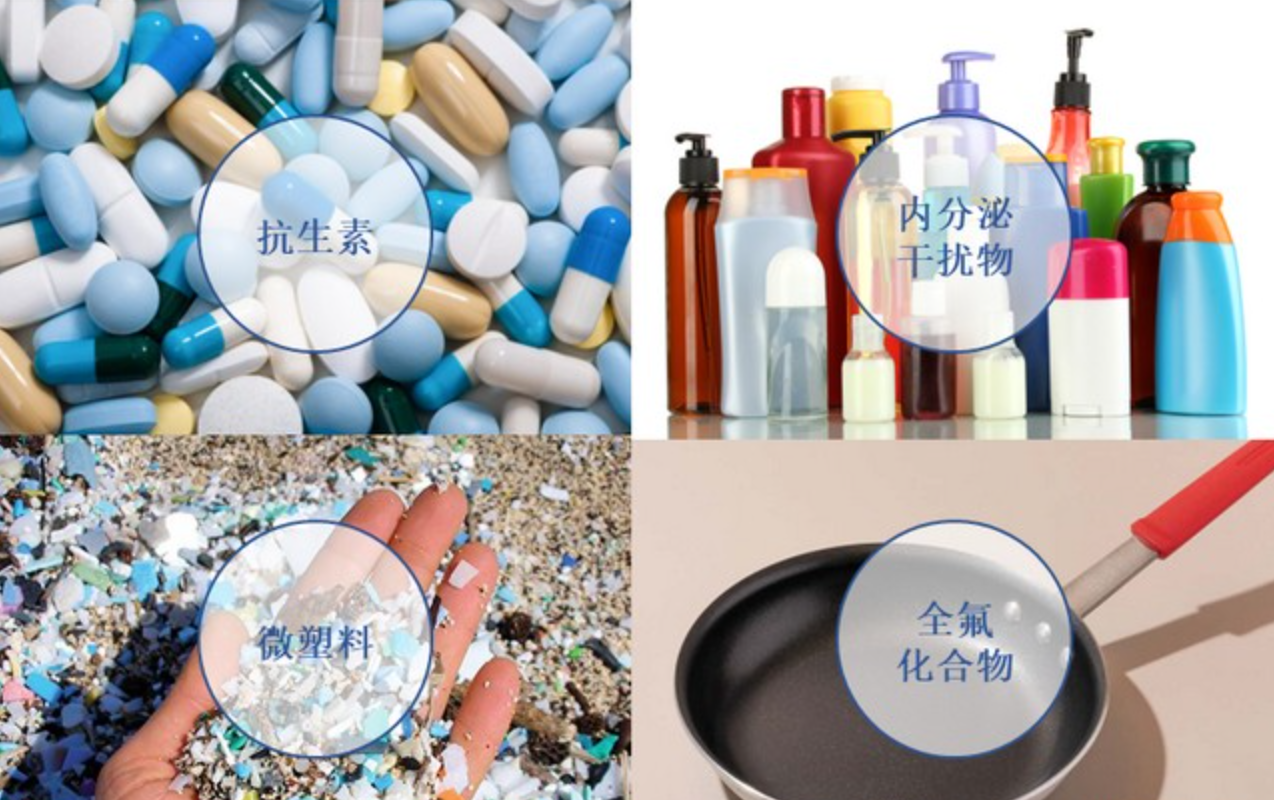
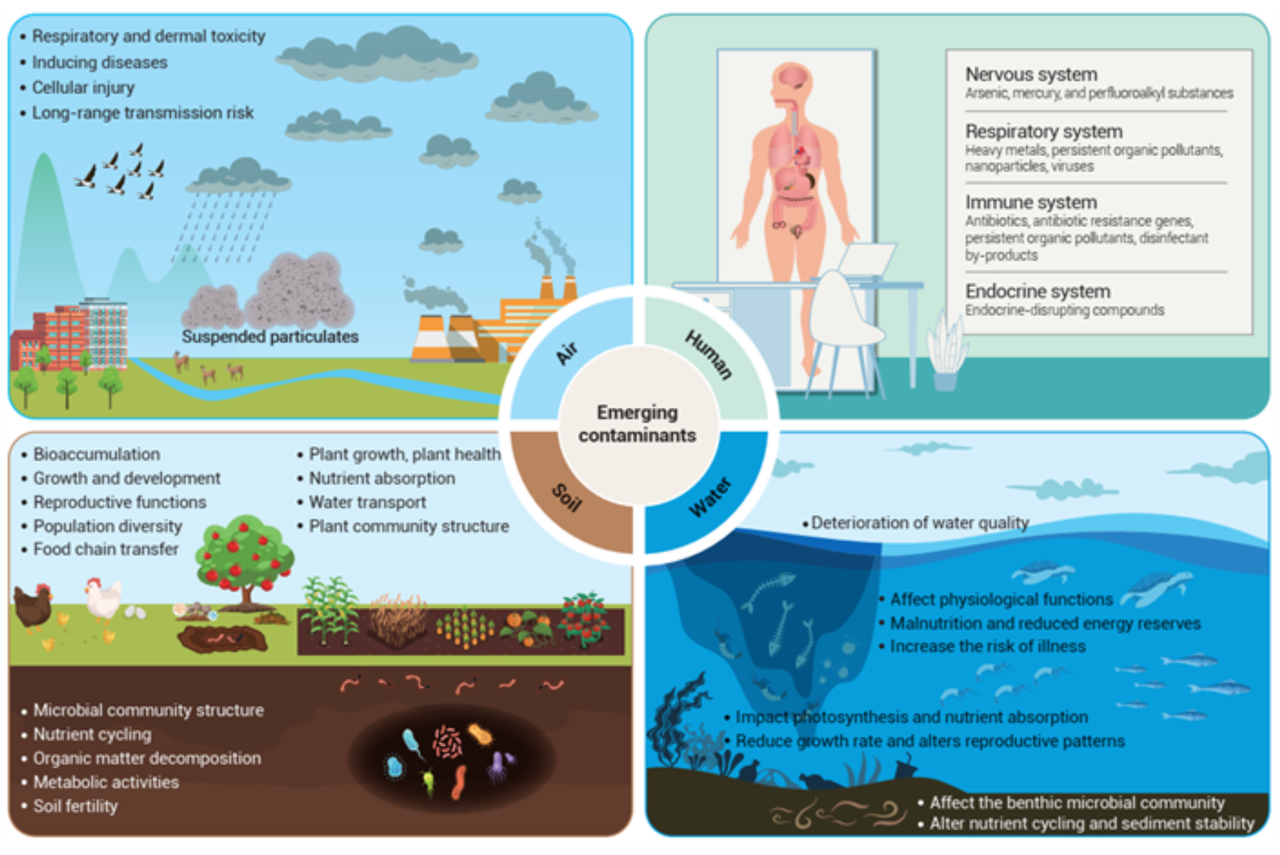
Micropollutants refer to substances with very low concentrations (usually ng/L to μg/L levels) but significant harm in the environment, such as antibiotics, pesticide residues, endocrine disruptors, 2-MIB, GSM, etc.; Emerging pollutants are new harmful substances that have attracted attention in recent years, such as pharmaceuticals and personal care products (PPCPs), microplastics, and perfluorinated compounds (PFAS).
工艺
机理
UV direct photolysis: UV energy is absorbed by pollutant molecules, breaking chemical bonds (such as carbon-carbon bonds, carbon-nitrogen bonds) and breaking them down into harmless small molecules.
UV indirect photolysis: If oxidants such as hydrogen peroxide (H₂O₂) are present in water, UV can stimulate the formation of hydroxyl radicals (・OH), which strengthens the oxidation ability of refractory pollutants.
Ozone-ultraviolet (O₃-UV) synergy: UV can promote ozone decomposition to produce more ・OH, and the oxidation efficiency is greatly improved compared to a single technology, especially suitable for high concentrations of refractory pollutants.
Ozone-bioactivated carbon (O₃-BAC): Ozone first degrades macromolecular pollutants, and then adsorbs residual pollutants and intermediate products through activated carbon, while microorganisms on the surface of activated carbon further decompose organic matter to achieve the synergistic effect of "oxidation-adsorption-biodegradation".
Ultraviolet-hydrogen peroxide (UV-H₂O₂): Suitable for low-turbidity water, H₂O₂ is produced under UV excitation and OH, avoiding ozone by-product problems, and is often used at the end of deep treatment of drinking water.
Application scenarios
For endocrine disruptors (such as bisphenol A, phthalates, dimethylisocanol (2-MIB), and geosmine (GSM)): direct photolysis combined with indirect photolysis has high efficiency, can quickly destroy its cyclic structure, and achieve removal effect.
Auxiliary inactivation: Combined with disinfection, it can inactivate bacteria and viruses (such as new coronavirus, cryptosporidium) in water while removing micropollutants.
Targeting emerging pollutants (e.g., PPCPs, microplastics): It can break down surfactants in shampoos and sunscreens, disrupting the polymer chains of microplastics and reducing their environmental persistence.
For refractory organic matter (e.g., polycyclic aromatic hydrocarbons, PFOS): Oxidation by ・OH breaks stable carbon-fluorine bonds and reduces the toxicity of PFAS.
Pretreatment synergy: Combined with subsequent biological treatment, macromolecular pollutants can be decomposed into small molecules that are easily used by microorganisms, improving the efficiency of subsequent treatment.